In this article, we will explain why investing is an integral component of your financial planning and address the fundamental questions that newcomers to the investment world should ask.
Why invest?
Spending less than you earn is a first essential step towards building financial security. However, saving alone is not always sufficient to preserve and grow your wealth. In an environment of low interest rates and inflation, the value of savings can gradually erode over time.
When you do not need immediate access to your cash, an alternative is to put it to work by investing it. Investing means allowing your capital to be used within the economy with the aim of generating potential returns over the long term. This approach gives your money an active role and supports the achievement of your financial goals.
Fighting inflation and preserving purchasing power
Before seeking to generate returns, it is essential to view investing first and foremost as a way to protect your capital against inflation. A common misconception is to assume that one Swiss franc saved today will retain the same value over time. In reality, with an average annual inflation rate of 1.6%, one Swiss franc saved today would be worth only around 72 cents in 20 years. Generating a return on your capital therefore plays a key role in preserving its value and maintaining your purchasing power over the long term.
Starting early and harnessing the power of compound interest
The exponential potential of investment is often underestimated. In the first year, your return is calculated based on the initial sum. In subsequent years, your return is calculated based on the initial sum at the start plus the gains from the previous year. This gradual accumulation can yield significant returns over the long term.
For instance, a 5% return on an investment of CHF 1,000,000 would generate CHF 50,000 in the first year. Without compound interest, this would result in a profit of CHF 1,000,000 over 20 years. However, by reinvesting the returns generated each year, you can amass a profit of CHF 1,653,000 over the same period.
What type of investor are you?
Before investing, it is essential to assess your current financial situation in order to determine how much you can invest and how to do so. A basic rule is to keep a sufficient cash reserve to deal with unexpected events. Once this safety buffer has been identified, you can evaluate the portion of your capital that can be invested without jeopardising your financial stability.
It is also important to clarify your investment objectives. Do you want to become a homeowner, prepare for retirement, grow an inheritance or build long-term wealth? Is the capital invested essential to your future, or can you afford to expose part of it to a higher level of risk?
The answers to these questions help define your investor profile and identify the types of investments most suited to your objectives, investment horizon and risk tolerance.
Which financial products to choose?
A wide array of financial products are available to help you build your investment portfolio. Some examples include:
-
Stocks: These represent ownership in a company and provide certain rights, such as voting at general meetings and receiving dividends.
-
Bonds: These represent loans extended to companies or governments, which grant periodic interest payments to bondholders.
-
Funds represent a share in a portfolio of securities managed by a bank or fund management company.
While these are well-known financial instruments, many other options have varying mechanisms and risk profiles.
Passive and active management
There are two main approaches to investment management. Active management involves regularly rebalancing a portfolio by buying and selling specific financial instruments based on economic scenarios or market forecasts. You may entrust these decisions to a bank or a wealth manager, or choose to design your portfolio yourself and retain full control over your strategy. This approach, however, can require significant time and expertise. Passive management, on the other hand, does not involve discretionary reallocations. Its objective is to replicate the performance of an index that reflects the behaviour of an asset, a market or an asset allocation. This is typically achieved by investing through one or more index funds managed by a bank or an asset management company.
In both cases, it is recommended to diversify risk and avoid investing all your assets in a single type of investment.
Conclusion
Investing plays a key role in shaping your life projects and in building savings or long-term financial security. However, it is above all essential to proceed with caution, to invest only in assets you understand, or to rely on the guidance of a qualified advisor.
The Piguet Galland team will be delighted to support you in your investment journey.
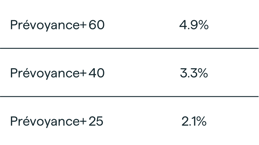
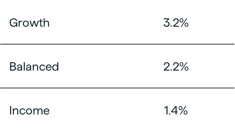
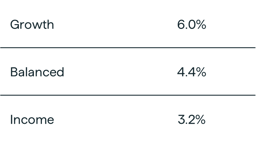
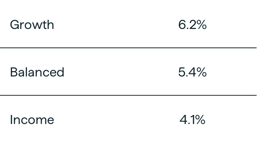
Annualised performance of discretionary management portfolios since 1 January 2019
CHF portfolio
EUR portfolio
USD portfolio
Prévoyance+ (CHF) portfolio