The 360 Series
Lifetime gifts and advancements on inheritance
Passing on wealth does not necessarily begin when an estate is settled. Many families choose to transfer part of their wealth during their lifetime, often to support the next generation at a time when it can make the greatest difference. Yet these decisions can affect the future distribution of an estate, the balance between heirs and the overall wealth strategy of a family.
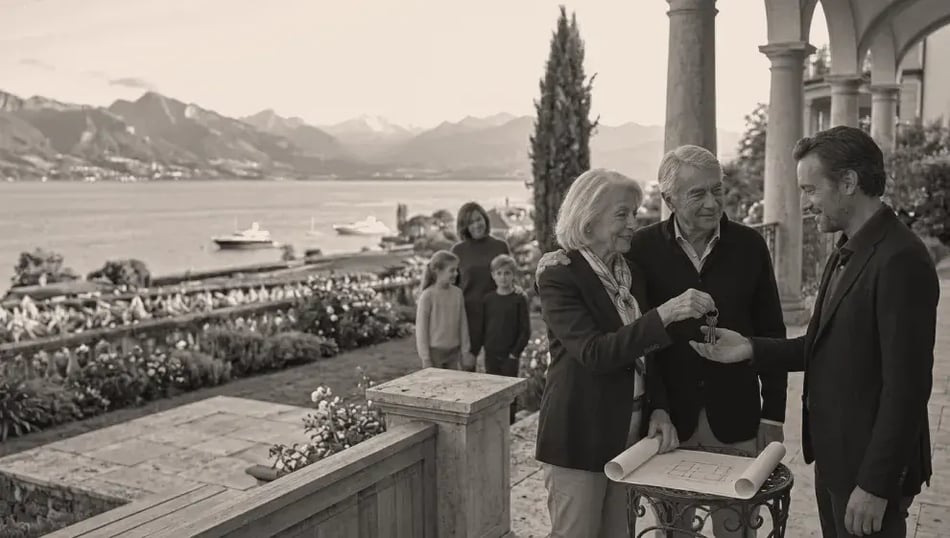
Why transfer wealth during your lifetime?
When people think about succession planning, they often focus on what happens after death.
In practice, however, many parents and grandparents prefer to transfer part of their wealth earlier, when it can support a meaningful life project.
This may include:
-
purchasing a first home;
-
financing education;
-
helping to start or acquire a business;
-
supporting a family project;
-
assisting the next generation at an important moment in life.
In some situations, a contribution made at age 30 or 40 may have a greater impact than the same amount received decades later.
Lifetime transfers may also help younger generations become involved in managing family wealth gradually rather than all at once.
At the same time, it is important to ensure that your own financial security remains intact, particularly in retirement.
What is the difference between a gift and an advancement on inheritance?
These two concepts are often treated as though they were interchangeable.
In reality, they do not necessarily produce the same legal and practical consequences when an estate is eventually settled.
Understanding the distinction helps avoid misunderstandings and preserve family harmony.
-
Advancement on inheritance
An advance on inheritance is an asset or sum of money transferred to a legal heir whilst the testator is still alive, in anticipation of their future share of the estate. In other words, it is not a gift that is entirely separate from the estate.
The reasoning is as follows: the child receives today a portion of what they would have received in any case upon the opening of the estate.
An advance on inheritance is therefore generally taken into account when the estate is divided.Example
A couple has two children.
Their son wishes to purchase his first apartment and receives CHF 200,000 from his parents.
No equivalent support is provided to his sister.
On the day the estate is opened, this contribution will be taken into account in the calculations in order to ensure equality amongst the heirs.
-
A gift: a transfer of wealth without counterpart
A gift involves transferring assets or money to another person without receiving equivalent value in return.
A gift may be made to:
- a child;
- another family member;
- an unmarried partner;
- a friend;
- a charitable organisation;
- any other beneficiary.
Unlike an advancement on inheritance, a gift is not necessarily intended to be offset against a future inheritance entitlement.
However, even when a gift is made, the rules relating to compulsory shares continue to play an important role.
Why does the distinction matter?
Because the consequences at the time of succession may be very different.
A parent may wish to:
- support a child while preserving equality between heirs;
- favour one child within the limits permitted by law;
- provide for an unmarried partner;
- support someone outside the family.
The way the transfer is characterised can influence how it will be treated in the future.
How are lifetime gifts taken into account when an estate is settled?
One of the key concepts in this area is inheritance equalisation.
The purpose of inheritance equalisation is to preserve fairness between heirs when certain benefits have already been received during the lifetime of the deceased.
The principle of inheritance equalisation
When an estate is settled, certain lifetime transfers may be brought back into account for calculation purposes.
This does not usually mean that previously transferred assets must physically be returned.
Rather, the objective is to restore balance between heirs when the estate is divided.
Example
Estate remaining at death: CHF 800,000
Two children.
One child has already received CHF 200,000 as an advancement on inheritance.
The reference estate becomes CHF 1 million.
Each child would notionally be entitled to CHF 500,000.
The child who already received CHF 200,000 would therefore receive a reduced share, helping preserve fairness between the heirs.
What happens when property is transferred during your lifetime?
Transfers involving property require particular attention.
A house, apartment or piece of land may increase substantially in value over time.
Imagine that a property is transferred to one child as an advancement on inheritance. Twenty years later, the property is worth significantly more than when it was transferred.
The question then becomes: which value should be taken into account when the estate is eventually settled?
In certain circumstances, changes in the value of the property will need to be taken into account when dividing the estate, which can have a significant financial impact on the balance between the heirs.
For this reason, property gifts and property succession planning generally deserve careful consideration as part of a broader wealth transfer strategy.
Can you favour one child over another?
Yes, within certain limits.
The 2023 reform of Swiss inheritance law increased testamentary freedom by expanding the freely disposable portion of an estate.
This means that it may be possible, in some situations, to favour one child or another beneficiary.
However, compulsory portions continue to protect certain heirs.
The issue is not always strict equality. Many families are instead looking for a fair solution that reflects individual circumstances.
Examples might include:
-
a child taking over the family business;
-
a child who has already benefited from substantial support;
-
a child with specific needs.
These situations often require careful planning.
Gift or family loan: which solution is most appropriate?
When a child needs significant financial support, there is sometimes another option worth considering: a family loan.
Unlike a gift:
-
the recipient is generally expected to repay the funds;
-
the parents retain a claim;
-
greater flexibility is preserved.
A family loan can be particularly useful when a child wishes to purchase property or finance a project without permanently altering the future balance of the estate.
In certain circumstances, it may also help protect the financial interests of the parents if their own needs change later in life.
What if the parents need that money later on?
This is probably one of the most common mistakes.
Out of generosity, some parents pass on a significant portion of their estate without having fully assessed their future needs.
Yet no one can know for certain:
-
how long they will live;
-
how their expenses might change;
-
their future medical needs;
-
or the potential cost of care.
An early transfer of assets must therefore always be preceded by a comprehensive review of their financial planning and retirement provisions.
Before helping their children, parents must first ensure that they themselves have sufficient resources to maintain their own quality of life.
Key takeaways
-
An advancement on inheritance is generally treated as an advance on a future inheritance entitlement.
-
A gift can have consequences for inheritance, taxation and family balance.
-
Lifetime transfers should be considered within a broader wealth planning and succession strategy.
Let's talk about your legacy
Helping the next generation is often one of the most meaningful uses of wealth. Yet every family has different objectives, constraints and priorities.
Our specialists can help you determine which solutions best reflect your personal, family and financial circumstances.
Legal information
- This site contains information relating to a large number of investment funds registered and managed in different jurisdictions. The information on this website is not directed to any person in any jurisdiction where (by reason of that person's nationality, residence or otherwise) the distribution of or access to this website is prohibited. Persons subject to such local restrictions must not access this website. The information published on this website does not constitute a solicitation or an offer or a recommendation to buy or sell or to enter into any other transaction in investment instruments. Further information
In the next episode
Discover how Pillar 3a assets, occupational pensions and life insurance are treated in the event of death, and how retirement planning can play a key role in protecting the people you care about most.
Frequently asked questions about gifts and advancements on inheritance
The "Estate Planning in Switzerland" series
Turning life’s ambitions into lasting legacies.
This 360 series provides the essential insights you need to understand estate planning in Switzerland, helping you protect your loved ones and transfer your wealth with confidence.
-
Episode #1
Estate planning in Switzerland: protecting and transferring your wealth
Why plan your estate and protect the people who matter most?
-

-

Episode #3
Matrimonial property regime and inheritance
What belongs to your spouse before the estate is divided?
-

Episode #4
Wills and inheritance agreements
How can you organise your estate according to your wishes?
-

Episode #5
Lifetime gifts and advancements on inheritance
How can you transfer wealth during your lifetime while preserving fairness among your heirs?
-

Episode #6
Pension assets and life insurance
How can you protect your loved ones through pension planning, Pillar 3a and life insurance?
-

Episode #7
Complex succession situations
How can you protect your family, your cohabiting partner or your business?
-

Episode #8
Inheritance and gift tax
Which taxes apply, and why do they vary from canton to canton?
-

Episode #9
Planning your estate in five steps
A five-step method to help you plan the transfer of your estate with peace of mind.
The information presented in this series is provided for general information purposes only and does not constitute personalised legal, tax or wealth planning advice. Family, financial and tax circumstances vary, and the implications of an inheritance or wealth transfer may differ significantly from one situation to another. Before making any decision, you should seek advice from a qualified specialist who can assess your individual circumstances.
A life project is not something you share with just anyone.
Dedicated experts in every field.
-

Investment
- Portfolio management
- Taxation
From investment advice to delegated portfolio management, we are dedicated to safeguarding your capital and securing its growth by identifying investment solutions that align seamlessly with your values, goals, and the assurance of peace of mind.
-

Wealth & Pension
advice- cohabitation or marriage
- Divorce
- Family
- Careers and pensions
- inheritance & succession
Bring vitality and success to your life projects by comprehensively analyzing your assets and optimizing their structure.
-

Financing
- Real estate projects
- Mortgage loan
- Lombard Loan
We offer various financing solutions for all your real estate projects, such as mortgages and Lombard loans.

Piguet Galland DNA
More than a friend,
a Piguet Galland private banker.
To provide you with the best possible support, we want to understand what keeps you awake at night, your plans, and your dreams. Our expertise lies in aligning your assets with projects close to your heart.
Your trusted partner
We understand that you expect more from us than trust and expertise. Above all, you want peace of mind for both the future and the present. It's our responsibility to deliver.
French-speaking and close to you
Because we are close to you, where you need us, and available when you need us, we conduct our wealth management business with agility and efficiency and always with a smile.

A human-scale bank backed by a solid financial group
Our majority shareholder, Banque Cantonale Vaudoise, is one of the few major banks in the world without a state guarantee, and it holds an AA rating from Standard & Poor's. This is concrete proof of our results.