


Europe regains momentum
The Euro Stoxx 50 reached a new all-time high this week, signalling renewed investor interest in Europe. The easing of international tensions and the rollout of stimulus plans reinforce our conviction that the Old Continent should reconnect with the favourable momentum observed at the beginning of the year.
Despite the war in Iran, the European economy has demonstrated surprising resilience. Leading indicators, particularly in the industrial sector, have stabilized quickly, as the energy shock remained limited thanks to a rapid decline in oil prices and a largely undisturbed gas market. The recovery is expected to be driven primarily by investment, supported by Germany’s stimulus plan and the Next Generation EU funds.
Market valuations are slightly above their historical average, which limits the potential for multiples to expand. Equity gains will therefore need to rely more on earnings growth, which is expected to exceed 12% this year. We believe this forecast is reasonable given share buybacks, the contribution from large-cap companies, and a favourable base effect following a lackluster 2025. In this context, we have increased our exposure to European equities.
The base case regains credibility
The easing of tensions in the Middle East has materially altered the investment landscape. The opening of dialogue between Tehran and Washington, together with the reopening of the Strait of Hormuz, has reduced the risk of a prolonged disruption to global energy supplies. As a result, markets are once again able to refocus on economic fundamentals, which led us a few weeks ago to shift back to a more favourable allocation toward equities.
More recently, the macro-financial environment has improved markedly. Diplomatic progress between Iran and the United States has diminished a geopolitical risk that had weighed heavily on investor sentiment. At the same time, the normalization of maritime traffic through the Strait of Hormuz has contributed to lower oil prices, effectively ruling out the scenario of a prolonged
energy shock.
This development represents a key factor for the global economic outlook. The risk of a combination of sharply higher inflation and a pronounced slowdown in economic growth has declined significantly. Investors therefore enjoy greater
visibility on economic fundamentals, which remain broadly resilient across the major economies.
The current environment brings us closer to the scenario we envisaged at the beginning of the year. Admittedly, central banks remain more vigilant regarding inflationary pressures than previously anticipated. Both the US Federal Reserve and the European Central Bank continue to adopt a cautious tone. However, in our view, this stance does not undermine the favourable medium-term
outlook for risk assets.
Accordingly, we recently decided to gradually return to our strategic equity allocation. We have primarily increased exposure to markets that had been most adversely affected by energy-related concerns, notably Europe and Asia, whose outlook now stands to benefit from lower oil prices.
In addition, we are reducing some of the hedges previously established against the US dollar. The greenback is once again supported by more durable underlying factors, reinforced by recent statements from the Federal Reserve’s new Chair, Kevin Warsh, reaffirming the institution’s independence and its commitment to maintaining price stability. Against this backdrop, the US dollar
appears to offer greater appreciation potential than it has in recent months.
Our asset allocation therefore reflects the conviction that the tail risks associated with an energy shock are gradually receding. While uncertainties remain, in our view, the return toward a more normalized economic environment justifies a higher allocation to risk assets.
This week's figure : -14%
The SOX semiconductor index has corrected sharply from its recent highs, a decline that could continue given how overextended the rally had become. At the same time, the Dow Jones has reached a new record high, signalling a resurgence of interest in traditional values.
Author
-
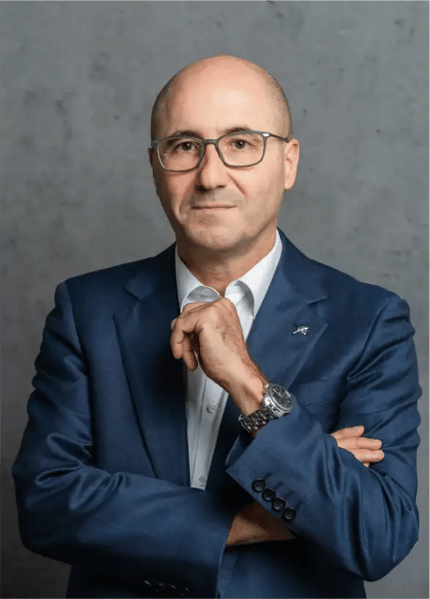
A graduate of the University of Geneva in Business Administration with a specialisation in finance, Daniel Varela began his career in 1989 as a fixed‑income portfolio manager. He joined Banque Piguet & Cie in 1999 as Head of Institutional Asset Management, also overseeing the Bank’s fixed‑income analysis and management. In 2011, he took charge of Piguet Galland’s investment strategy and the Investment Department. He has been a member of the Executive Committee since January 2012, serving as Chief Investment Officer.

-webp.webp?width=488&height=440&name=Group%20316127823%20(4)-webp.webp)