


The Fed’s independence under threat once again.
Over the weekend, tensions between the White House and the Federal Reserve (Fed) reached an unprecedented level following the opening of a criminal investigation into Jerome Powell by the Department of Justice. According to public statements by the Fed Chair, this procedure, officially related to the renovation of the institution’s offices, is in fact a form of direct political pressure aimed at influencing the trajectory of interest rates. The stakes extend well beyond Mr. Powell’s personal situation and strike at the heart of US monetary independence, now at risk of being subordinated to the priorities of the executive branch. This new attack on the Fed may trigger short-term volatility in financial markets. Initial reactions have shown a slight pullback in risk assets, a rise in gold prices, and further weakening of the US dollar. Over the longer term, and in the absence of strong institutional safeguards, the US dollar could remain on a downward path as investors begin to price in a political risk directly affecting the conduct of monetary policy.
2025 trends set to continue into the new year
Following a 2025 marked by resilience despite tariff shocks, leading indicators now suggest a gradual acceleration in growth. In the United States, the normalization of inflation, the strength of consumer spending, and the rebound in business confidence point to a promising stabilization. A few signs of weakness in the labour market, however, are likely to prompt the Federal Reserve to continue gradually lowering its key interest rates. This, in turn, should support investment and help reinforce the economic cycle.
In Europe, Germany’s stimulus plan is reviving momentum in an economy that had lacked it for several quarters, a development that should also benefit neighbouring countries. Meanwhile, in China, authorities are multiplying targeted measures to prevent an overly sharp slowdown. These combined stimuli are increasing the likelihood of a coordinated global cycle restart.
Expected earnings growth remains a key driver for equities in 2026. Despite somewhat elevated valuations, particularly on Wall Street, this asset class continues to offer the most attractive relative potential, supported by cyclical improvement and a favourable monetary and fiscal environment. In Switzerland, the reduction in customs duties, from 39% to 15%, significantly improves visibility for exporters.
In fixed income markets, visibility remains solid, though price appreciation potential appears limited. As such, performance will mainly be driven by coupons. Given Switzerland’s very low-interest rate environment, CHF-denominated bonds remain unattractive, whereas emerging market debt in local currencies offers an appealing real rate differential. On the currency front, continued monetary easing in the US should keep moderate pressure on the dollar. Cyclical currencies and those of certain emerging markets stand to benefit more from the global recovery.
Against this backdrop, we are increasing our equity exposure by raising the allocation to Swiss stocks within balanced profiles. This shift is funded by a reduction in CHF-denominated bonds and listed Swiss real estate, whose yields now appear too low. Lastly, we are initiating a position in emerging market local currency bonds at the expense of high-quality US Treasuries.
This week’s figure: 2%
As expected, euro-zone inflation declined last month to reach 2%, in line with the European Central Bank’s target. The disinflation process across the Old Continent is well underway, and inflation could ease further in the coming months.
Author
-
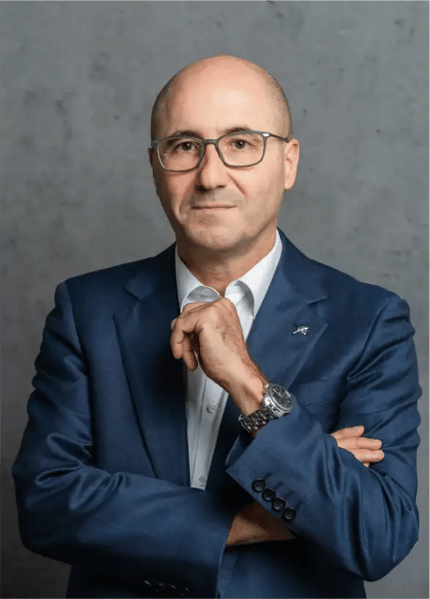
A graduate of the University of Geneva in Business Administration with a specialisation in finance, Daniel Varela began his career in 1989 as a fixed‑income portfolio manager. He joined Banque Piguet & Cie in 1999 as Head of Institutional Asset Management, also overseeing the Bank’s fixed‑income analysis and management. In 2011, he took charge of Piguet Galland’s investment strategy and the Investment Department. He has been a member of the Executive Committee since January 2012, serving as Chief Investment Officer.

-webp.webp?width=488&height=440&name=Group%20316127823%20(4)-webp.webp)